
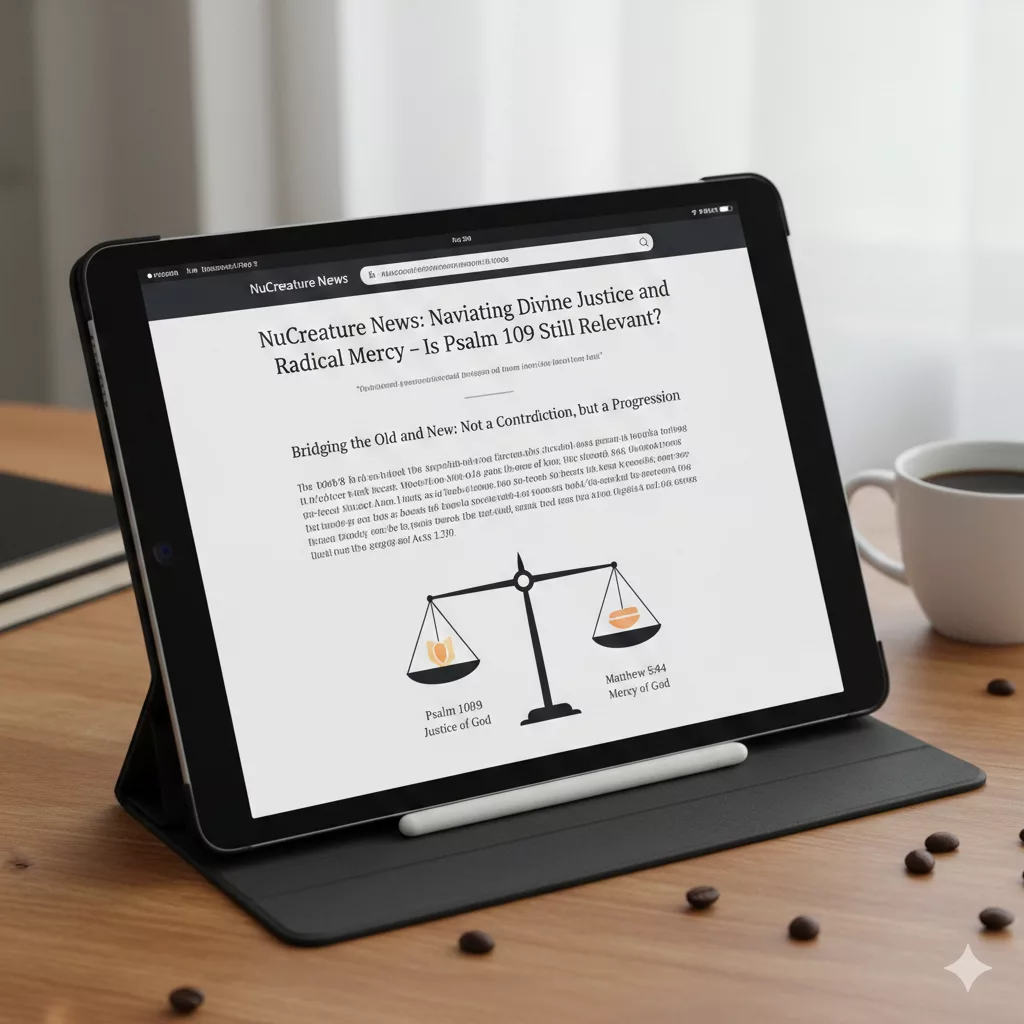

Is Psalm 109 still relevant? I asked myself this question this morning after I woke up to a prayer for God to avenge my enemies. After all, “Vengeance is mine says the Lord” right? But then I wrestled with “”Bless those who curse you” from Mathew 5:44.
Below I will discuss the fiery imprecations of Psalm 109 alongside Yeshua’s revolutionary command in Matthew 5:44: “Bless those who curse you.” At first glance, these two scriptures seem to contradict, right? How can a believer in the New Covenant reconcile David’s cry for God’s judgment with the call for God’s mercy?
Psalm 109 For NuCreatures: Bridging the Old and New
It’s vital to recognize that the New Testament doesn’t discard Psalm 109; it acknowledges its prophetic weight. The Apostle Peter himself quotes Psalm 109:8 in Acts 1:20 to justify Judas Iscariot’s replacement. This demonstrates that even under the New Covenant, the Holy Spirit affirms the enduring relevance of this Psalm.
The “relevance” of Psalm 109 today lies not in giving us permission for personal vendettas, but in teaching us how to handle profound hurt and injustice. David, in his agony, didn’t take revenge; he “became prayer” (Psalm 109:4), entrusting his case to the ultimate Righteous Judge. This perfectly aligns with Paul’s later instruction: “Never take your own revenge, beloved, but give place to the wrath of God” (Romans 12:19, CJB).
Psalm 109 For NuCreatures: Prophetic Warning vs. Personal Malice
Many scholars view the harsh “curses” in Psalm 109 not as David’s personal desires for malice, but as a prophetic description of the inevitable consequences that await those who persistently reject God’s grace. David is, in essence, articulating the divine principle: “He loved cursing; let it come on him! He took no pleasure in blessing; let it be far from him!” (Psalm 109:17, CJB).
The New Testament, through Yeshua, then introduces a new dimension: the believer’s response. While the wicked will indeed face the judgment foretold in Psalm 109, we are commanded to offer them a different path – the path of the Gospel – through our actions of love and blessing.
The “Imprecatory” Heart in the New Covenant
So, is it ever appropriate for a believer to pray a “Psalm 109” prayer? The answer lies in discernment. While we are always called to pray for the repentance and salvation of individuals, we can—and should—pray for the destruction of the evil systems, spiritual strongholds, and oppressive forces they represent. As Ephesians 6:12 reminds us, “our struggle is not against flesh and blood.”
Psalm 109 gives us the language to cry out against deep injustice, human trafficking, or systemic evil, allowing us to pour out our righteous indignation to God. At the same time, Matthew 5:44 safeguards our hearts, preventing them from becoming bitter or hateful toward the individuals caught in those destructive patterns.
In essence, Psalm 109 underscores the necessity of divine justice, while Matthew 5:44 reveals the radical depth of divine mercy that we, as NuCreatures, are called to embody. Without the backdrop of God’s justice, His mercy would lack its profound meaning. We are empowered to “bless” because we trust that God is the one who will ultimately “judge,” freeing us from the heavy burden of vengeance and enabling us to extend grace.


Leave a Reply