
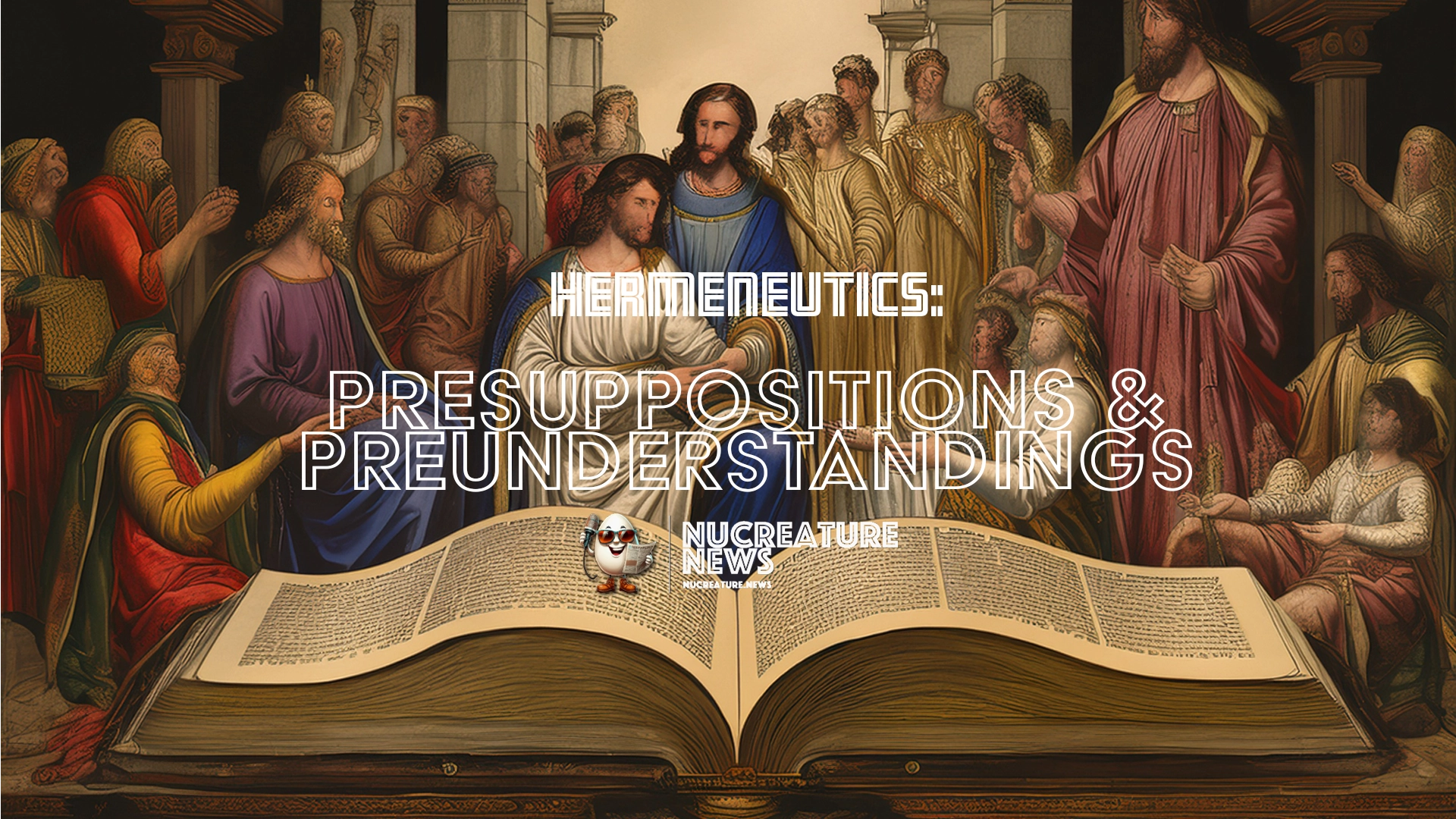

While both presuppositions and preunderstandings involve prior beliefs, presuppositions are specific, conscious assumptions, while preunderstandings are broader, encompassing all preconceived notions and attitudes, both conscious and subconscious, that shape our interpretation of biblical understanding.
Presuppositions:
- Presupposition: a foundational belief or assumption that a person already has before encountering biblical text. These foundational beliefs can create the lens in which a reader can see through and can create either a true or false reality of their biblical understanding.
For example, many Africans and African Americans have believed since the time of slavery that the bible is a “white man’s book”, was translated and written by a white man due it’s false historical images from paintings depicted by Michael Angelo in the 15-16th century and the Old English language it is written in.
These assumptions have led to scriptural misinterpretations and integrations of African culture based on presuppositions understood by slaves who could barely read much less interpret scripture in its true context.
One example of a misinterpretation of biblical context authored in the culture of a Jewish author is when David “danced” until his clothes fell off. At least that’s the presupposition in the African American church. When in actuality, David danced with such enthusiasm, that his ephod (a linen robe) fell off of him, but he was not so out of control that ushers had to contain him as he passed out unconscious on the church floor when they delivered the Arch of the Covenant. (2 Sam. 6:14-23 KJV)
Over time, this West African tradition evolved into the “Ring Dance” which is now called the “Praise Dance” in Black Churches. See Video Below.
Preunderstandings:
- Preunderstanding: is when a person reads through the lens of their own cultural background, biases, experiences at the interpretation table. This happens when cultural norms can conflict with a person’s biblical understanding.
- For example, since I mentioned African slaves as an example earlier, another cultural norm that put a blemish in the african american culture was the scripture that says, “spare the rod spoil the child” in Proverbs 13:24. This was interpreted as beating the child with a literal rod causing physical child abuse. When in actuality, it meant disciplining a child to make them understand that actions have consequences.
- The bible says, “God disciplines those He loves”, but does that mean God beats us with a huge tree limb? Absolutely not! This cultural lens came from the African slaves who were beaten during disciplinary actions by white slave masters.
My Personal Preunderstanding:
One of my personal pre understandings of the biblical text was the King James Version of the Bible which depicted scripture in an Old Latin Vulgate or Old English text and tone. Also, seeing paintings of Europeans as biblical characters along with movies like the Ten Commandments, I was deceived into believing that Jesus and all of the Old Testament Prophets were European as well.
Thankfully my personal life experiences introduced me to the original manuscripts and the Complete Jewish Bible (CJB) by David H. Stern which helped me understand the true text of the Old Original Hebrew, Aramaic and Greek text. I have endeavored to read the bible all over again seeing through the lens of Jewish culture in order to understand the Nation of Israel’s role in prophecy, the Messiah’s real name before the creation of the letter “J” in 1605, why Yeshua brought wine to a wedding, and more.
Sources:
GotQuestions.org. “What does it mean to spare the rod and spoil the child?” GotQuestions.org. Accessed April 4, 2025. https://www.gotquestions.org/spare-rod-spoil-child.html.
Dictionary.com. “J | Definition, origin, and meaning of the letter J by Dictionary.com.” Dictionary.com. Accessed April 4, 2025. https://www.dictionary.com/e/j/.



Leave a Reply